
 ▾


If you’ve tried a chicken curry recipe at home and found it never tastes as deep as the one from your favorite Indian restaurant, I’ve been there. The first chicken curry I cooked on my own, in my tiny first apartment, tasted like spiced tomato soup with chicken floating in it. I had pulled the onions off the heat the second they turned soft, dumped in a heaping spoonful of curry powder, and hoped for the best. The sauce was thin, sharp, and forgettable. It took me years and more than a few bland, watery batches to realize that great curry isn’t about a secret ingredient. It comes down to a handful of techniques most recipes skip.
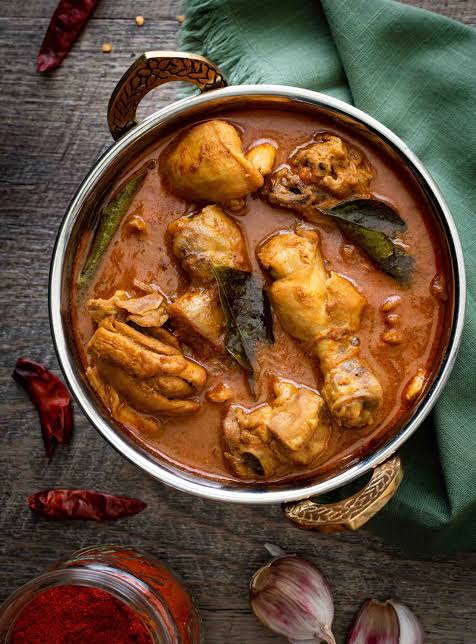
This chicken curry recipe is the one I cook most often. It’s home-style: juicy chicken thighs simmered in a spiced onion-tomato sauce with whole spices, garam masala, and a little yogurt for body. There’s no jarred paste, no cornstarch, and no shortcuts that flatten the flavor. It takes about an hour, most of it hands-off, and it tastes even better the next day.
Below, you’ll find the full recipe, the reasoning behind each step, easy variations (creamy, coconut, Instant Pot, and slow cooker), a troubleshooting guide, and answers to the questions readers ask me most.
How to Make Chicken Curry (Quick Answer)
To make chicken curry, bloom whole spices in hot ghee, then brown finely chopped onions until deep golden. Add ginger, garlic, ground spices, and tomatoes, and cook until oil separates at the edges. Stir in tempered yogurt, add chicken thighs and hot water, and simmer gently until tender (at least 165°F). Finish with garam masala and cilantro.
- Prep time: 15 minutes
- Cook time: 45 minutes
- Total time: 1 hour
- Servings: 4
- Spice level: Medium (easy to adjust)
- Best cut: Bone-in or boneless chicken thighs
- Freezer-friendly: Yes, up to 3 months
What Is Chicken Curry?
Chicken curry is a broad name for chicken cooked in a spiced sauce, and India alone has hundreds of versions. There are tangy Goan curries, coconut-rich curries from Kerala, nut-thickened Mughlai gravies, and the everyday home-style curry that families cook on a weeknight. This recipe is a classic Indian chicken curry from that last group.
The heart of it is the masala: onions cooked slowly until deep golden, then ginger, garlic, tomatoes, and ground spices fried together until the oil starts to separate. Nearly all the flavor comes from that base. Restaurant favorites like chicken tikka masala and butter chicken are close cousins, but they lean on cream, butter, and grilled chicken. This curry is lighter, more aromatic, and closer to what you’d be served in an Indian home.
Ingredients and Substitutes
1. Chicken
I recommend chicken thighs. Bone-in, skinless thighs or drumsticks make the richest curry because the bones flavor the sauce as it simmers. Boneless thighs are a close second and cook faster. In many Indian homes, a whole chicken is cut into small “curry-cut” pieces with the bone in, and you can ask your butcher for that. Chicken breast works too, but it dries out easily, so check the recipe notes before using it.
2. Aromatics
You’ll need yellow onions, fresh ginger, garlic, and one or two green chiles (serrano or Indian green chiles). Chop the onions finely so they cook down to a soft, jammy texture. Grate the ginger and garlic on a microplane so they melt into the sauce like a paste.
3. Whole spices
You’ll need a bay leaf, a cinnamon stick, cloves, green cardamom pods, and cumin seeds. If you don’t have them all, the curry will still be good, but they make a noticeable difference.
4. Ground spices
This recipe uses turmeric, ground coriander, ground cumin, garam masala, and Kashmiri red chili powder. Kashmiri chili gives curry its deep red color with only mild heat. If you can’t find it, use sweet paprika with a pinch of cayenne.
5. Tomatoes, yogurt and fat
Use ripe tomatoes (or canned crushed tomatoes in winter), whole-milk plain yogurt, and ghee or a neutral oil. Ghee adds a nutty richness that I love.
Shopping tip for US cooks: Indian grocery stores sell whole spices, Kashmiri chili, and garam masala for a fraction of supermarket prices, and their high turnover means fresher spices. Most large supermarkets now carry them in the international aisle, and they’re easy to order online. My own habit is to buy whole spices in small bags from my neighborhood Indian grocer and toast and grind a fresh batch of garam masala every couple of months. If you buy it ready-made, open the jar and smell it first. Good garam masala smells warm and almost sweet, never dusty. I also write the purchase date on every spice jar, because ground spices lose most of their punch within about six months.
Ingredients
Method
Video
Notes
- Using chicken breast: Cut it into 1½-inch pieces and simmer for only 8–10 minutes in step 9, or until it reaches 165°F. Cooked any longer, it turns dry and stringy.
- Whole spices: You can leave them in or remove them before serving. If you leave them in, let guests know to watch for the cloves and cardamom pods.
- Salt: Kosher salt brands vary a lot. If you use Morton kosher salt, start with about 1 tsp total.
Why This Chicken Curry Recipe Works: 7 Key Techniques
1. Bloom whole spices in hot fat
Frying whole spices in ghee for a few seconds (a technique called tadka) releases their aromatic oils. They keep infusing the sauce as it simmers, which gives a rounder flavor than ground spices alone.
2. Brown the onions properly
This is the step most people rush, and it’s the biggest reason homemade chicken curry tastes flat. Pale, translucent onions give you a thin, sharp sauce. Deep golden onions give you sweetness, color, and body. Keep the heat at medium and be patient. My trick is to keep a small glass of water right next to the stove. Every time the onions start to catch on the bottom of the pot, I add a splash and scrape. It keeps them browning evenly instead of scorching at the edges while the middle stays pale.
3. Watch for the oil to separate
After the tomatoes cook down, the masala will look glossy and you’ll see a thin ring of oil around the edges of the pot. That’s your signal that the spices are fully cooked and the base is ready. If you skip this, the curry can taste raw or grainy.
4. Keep the yogurt from curdling
Yogurt splits when it hits high heat suddenly, especially if it’s cold, low-fat, or watery. Use whole-milk yogurt at room temperature, whisk it smooth, and temper it with a little hot masala before adding it to the pot on low heat. If your yogurt is runny, strain it for 10 minutes first. Greek yogurt works well too.
5. Use hot water, not cold
Adding cold water drops the temperature of the pot sharply and can make the chicken seize and toughen. Keep a kettle or a mug of hot water nearby.
6. Simmer gently and let it rest
A hard boil makes chicken rubbery. Keep the curry at a lazy simmer, then give it a few minutes off the heat before serving so the flavors settle and the sauce thickens slightly.
7. Add garam masala in two stages
Garam masala is a finishing blend, and its aroma fades with long cooking. This recipe adds half with the other ground spices for depth and stirs in the rest at the end, so the warm fragrance stays bright.
Easy Chicken Curry Variations
1. Creamy chicken curry
Stir in ¼ to ⅓ cup heavy cream during the last 2 minutes. Keep it modest, because too much cream mutes the spices.
2. Coconut chicken curry
Swap the yogurt and water for one 13.5-oz can of full-fat coconut milk, warmed before you add it. A sprig of curry leaves bloomed with the whole spices makes it taste closer to a South Indian curry.
3. Quick 30-minute weeknight version
Use boneless thighs cut into small pieces, chop the onions in a food processor, and skip the whole spices. In a pinch, replace the coriander, cumin, and chili with 2 tablespoons of good curry powder. It won’t be quite as layered, but it’s still very good.
4. Instant Pot chicken curry
Follow steps 1–8 using the Sauté function. Add ½ cup water and scrape the bottom well to avoid a burn warning. Cook on high pressure for 6 minutes (boneless thighs) or 10 minutes (bone-in), then let the pressure release naturally for 10 minutes. Stir in the remaining garam masala and the cilantro. For the smoothest sauce, you can also hold back the yogurt and stir it in after pressure cooking.
5. Slow cooker chicken curry
Make the masala on the stove through step 6, then transfer it to the slow cooker with the chicken and ½ cup water. Cook on low for 3–4 hours (boneless) or 4–5 hours (bone-in). Stir in the tempered yogurt, the remaining garam masala, and the cilantro at the end.
6. Add vegetables
Add cubed potatoes or cauliflower with the water in step 9. Stir in a drained can of chickpeas or a cup of frozen peas for the last 10 minutes, and wilt in a couple of handfuls of baby spinach just before serving.
7. Dairy-free chicken curry
Replace the yogurt with ¼ cup cashew paste (soak 12–15 raw cashews in hot water for 20 minutes, then blend smooth) or with coconut milk, and use oil instead of ghee.
Common Problems and How to Fix Them
| Problem | Likely cause | How to fix it |
| Sauce is thin or watery | Too much water, or the onions weren’t browned enough | Simmer uncovered for 5–10 minutes. Mash a few pieces of onion against the side of the pot. |
| Tastes bland | Under-salted, stale spices, or pale onions | Add salt a pinch at a time, plus ½ tsp garam masala and a squeeze of lemon. |
| Tastes bitter | Garlic or ground spices burned | Stir in a spoonful of cream or a pinch of sugar. Next time, lower the heat and add a splash of water with the spices. |
| Yogurt curdled | Cold or low-fat yogurt added over high heat | The curry is still safe to eat. Stir vigorously, or blend a cup of the sauce and stir it back in. |
| Too spicy | Hot chili powder or extra green chiles | Stir in more yogurt, cream, or coconut milk, and serve with cooling raita. |
| Chicken is tough or dry | Breast meat overcooked, or the curry boiled hard | Use thighs, keep a gentle simmer, and check with a thermometer. |
What to Serve with Chicken Curry
Steamed basmati rice is the classic choice, and jeera (cumin) rice is even better. For bread, try naan, roti, chapati, or flaky paratha to scoop up the sauce. Round out the meal with cucumber raita, a crisp kachumber salad of tomato, cucumber, and onion, a few papadums, or a spoonful of mango pickle. At my table, it’s almost always jeera rice, a bowl of cucumber raita, and thinly sliced red onions tossed with lemon juice and a pinch of salt. Those sharp, tangy onions cut right through the richness of the curry, and they take two minutes to make.
How to Store, Freeze, and Reheat Leftovers
- Refrigerate: Store the curry in an airtight container and refrigerate it within 2 hours of cooking. It keeps for 3–4 days, in line with USDA guidance for cooked leftovers.
- Freeze: Freeze in portions for up to 3 months. Potatoes can turn grainy after freezing, so add them fresh when you reheat if you can.
- Thaw: Thaw overnight in the refrigerator.
- Reheat: Warm on the stove over medium-low heat with a splash of water until it’s steaming hot (165°F). The microwave works too; stir halfway through.
- Make ahead: The masala base (through step 7) keeps for 3 days in the fridge or 3 months in the freezer, which turns this into a 25-minute dinner.
Make This Chicken Curry Recipe Your Own
Once you’ve made this chicken curry recipe a couple of times, the steps become second nature: bloom, brown, fry, simmer, finish. From there, you can make it your own with more heat, a splash of coconut milk, or a pot full of vegetables. This is the curry I make when friends come over for the first time, because it’s hard to get wrong, and it fills the whole house with a warm, toasty aroma before anyone sits down. I usually double the batch and freeze half for a busy weeknight when cooking is the last thing I want to do.
If you try it, I’d love to hear how it turned out. Leave a star rating and a comment below, and tell me what you served it with. For more recipes like these visit Hungry Hop!